

ICE Near Your Business? Steps Owners Should Take

Feb 5, 2026

Immigration enforcement activity can be unsettling for business owners and employees alike. Especially during the second Trump presidency, since it has become more aggressive in its enforcement. Here in Arizona, Immigration and Customs Enforcement’s (ICE) activities have mainly taken the form of raids on restaurants so far.  Is ICE near your business?  Do not panic—being calm and in command is the key attitude to protecting your business while staying within the law.

Read the practical, lawful steps business owners should take when ICE agents are close or make contact.


1. Prepare by Implementing Strong Compliance Practices on Employment Eligibility

In our last blog, we explained why it is important for businesses follow best compliance practices for employment eligibility. These processes ensure you are doing everything to comply with the law.

Among the tasks that demonstrate compliance are:

  • Completing Form I-9 accurately and on time

  • Submitting the I-9 information within three business days of the employee’s start work date to the E-Verify platform

  • Maintaining I-9 records separately from general personnel files, either electronically or in hard copy

  • Keeping only what is required by law—do not retain or request extra documentation beyond what the I-9 process mandates.

2. Train Your Team Before Anything Happens

The worst time to create a plan is during enforcement activity. Preparing a plan and delivering formal training to your employees are vital to your business’s success.

Business owners should:

  • Train managers on ICE protocols

  • Provide staff with simple, written instructions

  • Revisit policies regularly as laws and enforcement priorities change

Preparedness protects your business, your personal assets, and your workers’ privacy.

3. Stay Calm and Designate a Point Person

Every business should have one trained individual—usually an owner, manager, or HR lead—authorized to interact with government agents.

  • Employees should not answer questions or provide documents on their own.

  • Front-line staff should know to only say:
    “Our manager/attorney handles all government inquiries.”

A calm, consistent response reduces confusion and risk.
4. Understand the Difference Between Public and Private Areas

ICE agents may enter public areas of a business (such as a lobby or retail floor) without permission when the business is open or operating.

However, non-public areas—like offices, kitchens, storage rooms, or employee-only spaces—require:

  • A valid judicial warrant, or

  • Voluntary consent from the business

  • We suggest clearly marking your business’s private areas and securing them to limit access.

You are legally allowed to ask:

  • “Do you have a warrant?”

  • “May I see it?

  • In Los Angeles and Minneapolis, business owners had chosen to close their businesses when they knew ICE was in the area. This is a good strategy when ICE is conducting aleatory searches, as it will force ICE to obtain a Judicial warrant to enter closed premises.

5. Review the Warrant Carefully

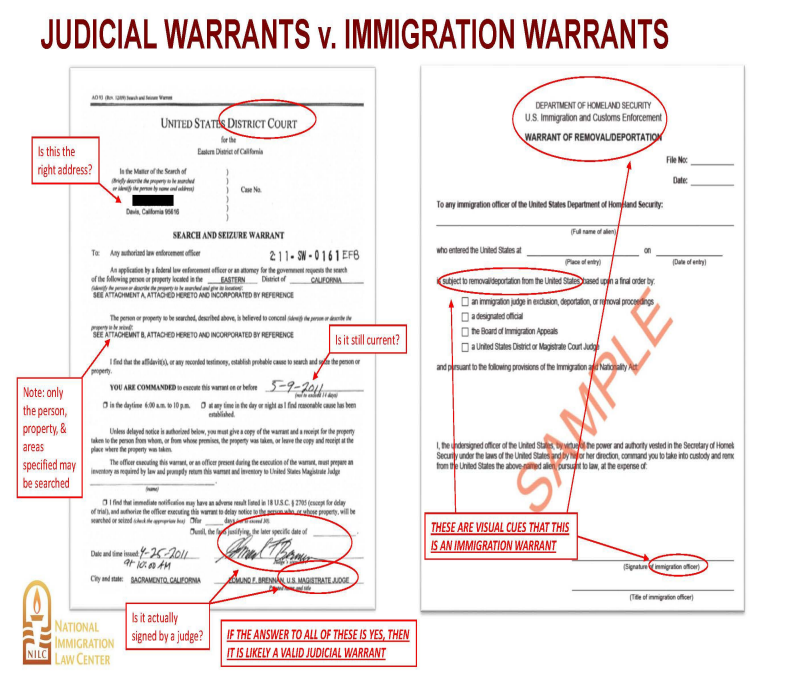
Not all warrants are the same. There are two important types.

  • Judicial warrant (signed by a judge)

    • May allow entry into non-public areas

  • Administrative ICE warrant (often Form I-200 or I-205)

    • ❌ Does not authorize entry into private business areas without consent

Check:

  • Correct business name and address

  • Signature of a District Court Judge or Superior Court Judge (not just ICE or DHS)

  • Scope of what is authorized

If you are unsure, you may state that you need to consult legal counsel before allowing access.

Here is an example by the non-profit National Immigration Law Center- NILC, of the difference between a judicial warrant and an administrative warrant.

ICE near You


6. Contact Legal Counsel

If ICE is present or requesting records:

  • Have a relationship with an attorney before hand
  • Contact your immigration or employment attorney right away

  • Do not make rushed decisions under pressure

  • Document the interaction (time, names, badge numbers, requests made)

Early legal guidance can significantly limit exposure. You can contact Attorney Marcos E Garciaacosta to schedule a consultation and establish a relationship with your business.

7. Do Not Obstruct—but Do Not Volunteer Information

Business owners should never obstruct an investigation. At the same time, you are not required to volunteer information beyond what the law requires in a warrant.

  • Do not provide employee records unless legally compelled

  • Do not answer questions about employees’ immigration status

  • Do not allow agents to roam freely without authorization. They can only enter the area specified in the warrant.

Neutral, professional boundaries are important to be established.

8. Protect Employee Rights

Employees have rights, regardless of immigration status:

  • The right to remain silent

  • The right to ask for an attorney

  • The right not to sign documents they do not understand

Employers should not instruct employees to run, hide, or lie—but they may ensure workers know their basic rights.

Final Thoughts

ICE activity near you does not automatically mean your business has done something wrong. But how you respond matters. By knowing your rights, establishing clear protocols, and seeking legal guidance, you can protect your business, comply with the law, protect your employees, and reduce unnecessary disruption.

If you are a business owner with questions about immigration compliance or enforcement preparedness, you can consult Attorney Marcos E. Garciaacosta, Esq., to help you respond appropriately to these challenging times.

Give us a call at (480) 324-6378.


Questions about your Case?

Schedule Your FREE 15-Min Consultation

What client have to say…